
TV Systems for RV Parks: The #1 Cabling Mistake – Splitters vs. Taps
RV Park TV System Cabling: Splitters vs. Taps
When a camper connects to your RV park’s cable TV system, they expect a clear, reliable picture. They do not know what type of cabling, connectors, splitters, or taps are underground. They only know whether the TV works.
If the picture is clear at campsites near your office but becomes pixelated, unreliable, or disappears completely farther into the park, the problem may not be your programming or headend. It may be the way the TV signal is being distributed through your cable plant.
One of the most common problems we find is the repeated use of splitters where properly selected taps should have been installed.
Why TV Signal Strength Changes Throughout Your Park
Your TV signal typically begins at a headend or another central distribution point. From there, it travels through coaxial cable to the pedestals throughout your RV park.
As that signal travels, it naturally loses some strength. The distance of the cable run, the condition of the cable, connectors, splices, and every component in the system can affect the signal that ultimately reaches your guest.
The goal is not simply to send the strongest possible signal into the cable plant. The goal is to deliver the correct signal level to every campsite, from the pedestal closest to the headend to the one at the end of the longest cable run.
That is where the difference between splitters and taps becomes important.
What Does a Splitter Do?
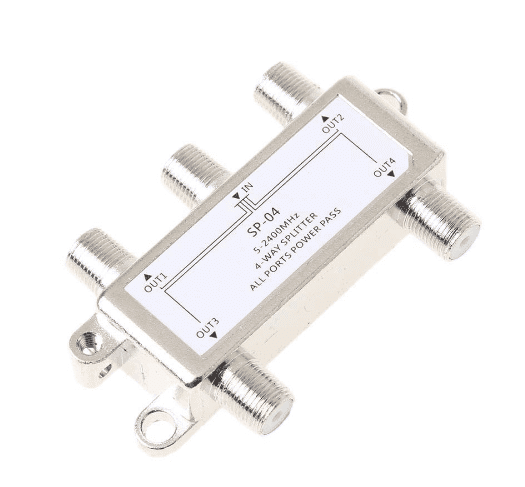
A splitter divides an incoming signal between two or more outputs. A two-way splitter divides the signal between two paths. A four-way splitter divides it between four.
Every time the signal is split, signal strength is lost.
In a small or carefully balanced section of a system, a splitter may be perfectly appropriate. The problem begins when splitters are repeatedly installed along a long series of cable runs without considering the cumulative signal loss.
The first few campsites may receive a strong signal, while the sites farther away receive a much weaker one. This can result in:
- Pixelation or freezing
- Missing channels
- Intermittent reception
- Poor picture quality
- Complete signal loss at distant pedestals
- Frustrated campers and additional work for your staff
Adding another splitter when expanding the park may appear to be a simple and inexpensive solution. Unfortunately, each shortcut can make the imbalance worse.
How Is a Tap Different?
A tap is designed to remove a controlled amount of signal for a campsite or branch while allowing the remaining signal to continue through the main cable run.
Different tap values can be used at different locations based on the amount of signal available and the distance the signal still needs to travel. When the system is properly engineered, this helps balance the signal levels throughout the park.
In simple terms, a splitter divides the signal. A tap helps manage it.
| Component | How It Handles the Signal | Where It Generally Works Best |
|---|---|---|
| Splitter | Divides the incoming signal between multiple outputs. | Balanced branches with similar cable lengths and signal requirements. |
| Tap | Removes a calculated amount of signal while passing the remaining signal down the main line. | Long, series-style cable runs serving multiple RV sites. |
The important point is not that every splitter is bad or that every tap automatically solves the problem. Both must be selected and installed as part of a properly designed distribution system.
Why Simply Increasing the Signal May Not Fix the Problem
When the signal is weak at the far end of the park, the first reaction is often to increase the output of the amplifier.
That may help the farthest sites, but it can create a new problem. Campsites closer to the headend may now receive too much signal, while the distant pedestals may still be affected by poor cabling, damaged connectors, incorrect splitters, or the wrong tap values.
You cannot accurately diagnose the problem by measuring the signal at only one location. Signal levels should be checked at multiple points throughout the cable plant.
Have Your Cable Plant Evaluated Before an Upgrade
Before installing a new TV system or replacing your existing headend, it is important to understand the condition and design of the infrastructure already in the ground.
A professional cable plant evaluation should examine the entire distribution path, including:
- The headend or signal source
- Amplifiers
- Underground and above-ground coaxial cable
- Splitters and taps
- Connectors and splices
- Signal levels at representative campsites
- The longest and most difficult cable runs
Our RV park cable plant wellness check is designed to identify the problems you can see and the ones hidden underground or inside pedestals.
This information can help you determine whether your existing cable plant can support a modern TV system, whether specific sections need to be repaired, or whether another distribution option would make more sense.
Build Your TV System Around Your Park
Every RV park is different. The number of campsites, cable distances, park layout, previous expansions, and condition of the existing infrastructure all affect how your system should be designed.
The right solution may involve correcting splitter and tap placement, replacing damaged sections of cable, redesigning portions of the distribution system, or considering a TV solution that does not depend entirely on underground coaxial cable.
You can learn more about our available TV systems and DIRECTV programming for RV parks and campgrounds.
Let’s Find the Source of Your TV Signal Problems
If your campers are receiving a great picture in one section of your park and an unreliable signal in another, do not assume you need to replace everything.
The problem could be an incorrect splitter, the wrong tap value, a damaged connector, or an unbalanced cable plant. Finding the actual cause before making changes can save you money and help you avoid repeating the same problem.
Call Barry Conley to discuss your RV park’s TV system or schedule a cable plant evaluation.
We will help you understand what is happening, what can be repaired, and which solution makes the most sense for your property.
RVparktv.com #DIRECTV #COM3000 #RVPark #campground